
The challenge
Coastal wetlands mangroves, salt marshes and tidal flats cover nearly 280,000 km² land globally and provide critical services including coastal flood protection, carbon storage and biodiversity support. Mangroves alone protect an estimated 15 million people from flooding each year (Menéndez et al., 2020). Despite their value, these ecosystems are disappearing faster than tropical rainforests. The primary driver is not only climate change itself, but the expansion of roads, buildings, and seawalls along coastlines, which blocks wetlands’ natural ability to migrate inland as sea levels rise. It is in fact the combined effect of sea-level rise and human-induced landscape modification that is driving projected global wetland loss throughout the 21st century.
Valuation methods
Estimating the economic value of non-market ecosystem services such as coastal protection requires specialised valuation techniques. The analysis carried out in the ACCREU project applies two biophysical production function methods. The avoided damage (AD) method quantifies the benefit of wetlands as the reduction in expected annual flood damages resulting from the dissipation of extreme sea level events by wetland vegetation on the coastal floodplain. The replacement cost (RC) method estimates the cost savings achieved by constructing lower sea dikes, made possible by wetlands’ capacity to reduce water levels before they reach hard defenses. Both approaches (Figure 1) translate the protective function of coastal ecosystems into measurable economic value either through reduced direct flood losses or through lower infrastructure investment and maintenance requirements.
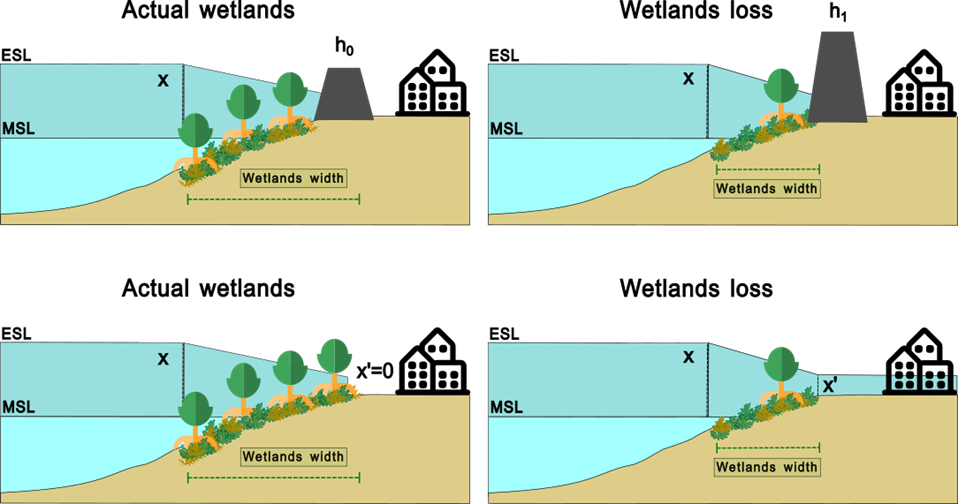
Figure 1: Avoided damage (lower panel) and replacement cost (upper panel) biophysical production function methods used for coastal wetlands coastal protection service valuation.
Key Findings
Using the DIVA model it was possible to estimate the coastal protection value of wetlands across European countries under scenarios of 10%, 20%, and 30% global wetland loss by 2100.
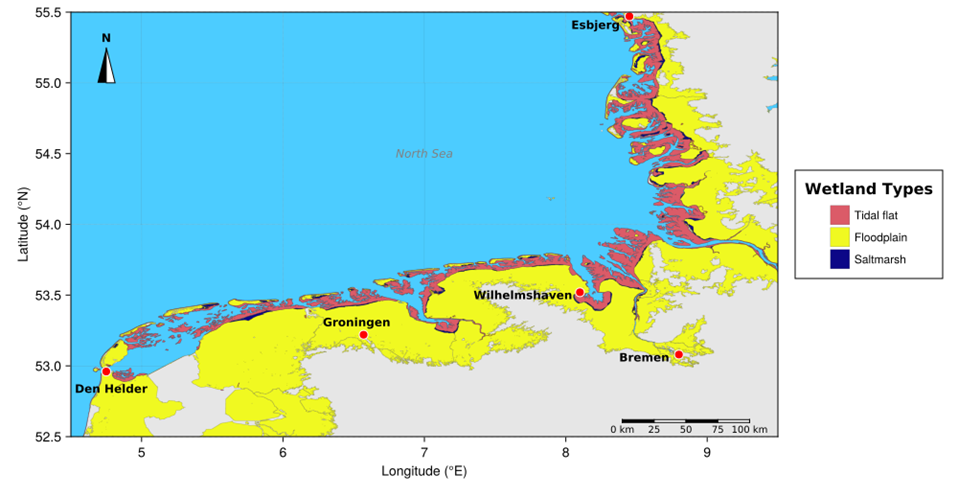
Figure 2: Map showing the coastal wetlands between the Netherlands and Germany along the North Sea coast. Floodplains are highlighted in yellow, tidal flats in orange and salt marshes in dark blue.
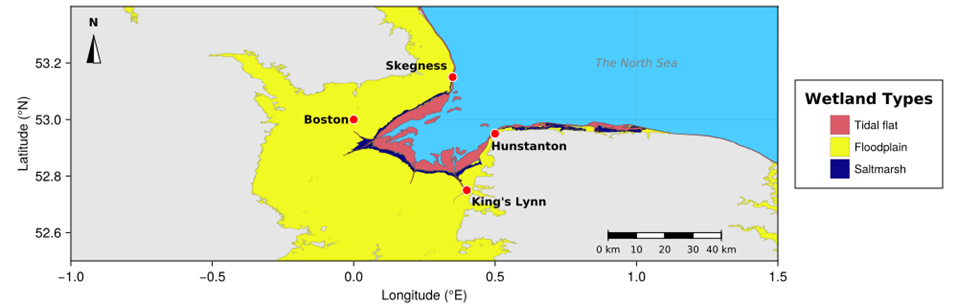
Figure 3: Map showing the coastal wetlands in The Wash, UK. Floodplains are highlighted in yellow, tidal flats in orange and salt marshes in dark blue.
Total European coastal protection benefits exceed USD 10 billion annually under current conditions. The United Kingdom shows the highest replacement cost savings at USD 4.2 billion per year, while the Netherlands leads in avoided flood damages at USD 2.0 billion per year. Replacement cost values are consistently 2–3 times higher than avoided damage estimates, demonstrating that natural wetland protection is far cheaper than engineered alternatives. Under progressive wetland loss scenarios, these benefits decline significantly, with particularly sharp drops for countries with densely populated, low-lying coastlines.
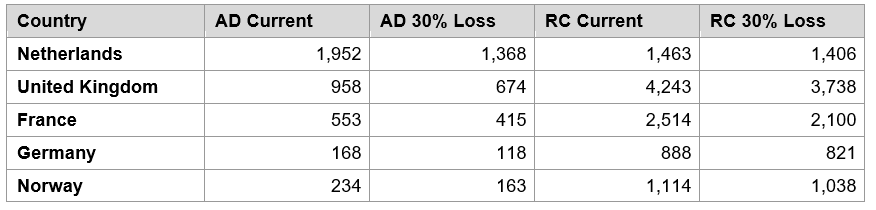
Table 1: Selected European Coastal Protection Values (million USD PPP)
Policy Implications
These findings carry a clear message for decision-makers: investing in wetland conservation and restoration is not only ecologically sound but economically rational. Unlike sea dikes, which require high upfront capital and ongoing maintenance, wetlands provide passive, self-reinforcing protection at a fraction of the cost. Three priorities emerge from this analysis.
First, halt further loss by restricting coastal development that blocks inland wetland migration. The expansion of hard infrastructure is the largest driver of wetland decline (Schuerch et al., 2018).
Second, integrate wetlands into climate adaptation strategies as cost-effective, nature-based alternatives to hard infrastructure, particularly for rural and low-populated coastal areas where wetlands offer the greatest relative advantage.
Third, incorporate natural capital valuation into planning. Treating wetland loss as a depreciation of natural capital and quantifying the resulting loss of future service flows makes the economic case for conservation visible to policymakers and investors alike.
Every hectare of coastal wetland lost represents a compounding economic loss. Protecting these ecosystems today avoids escalating costs tomorrow.
Related ACCREU deliverable
Impacts on Ecosystems & Biodiversity
by Amanda Palazzo, Andre Nakhavali, Gemma Gerber, Juliana Arbelaez-Gaviria, Martin Jung (IIASA); Martin Drews, Ophélie Georgina Marie Meuriot, Jorge Soto Martin (DTU); Sebastiano Bacca, Jochen Hinkel, Daniel Lincke (GCF)
References
Menéndez, P., Losada, I. J., Torres-Ortega, S., Narayan, S., & Beck, M. W. (2020). The Global Flood Protection Benefits of Mangroves. Scientific Reports, 10(1), 4404. https://doi.org/10.1038/s41598-020-61136-6
Schuerch, M., Spencer, T., Temmerman, S., Kirwan, M. L., Wolff, C., Lincke, D., McOwen, C. J., Pickering, M. D., Reef, R., Vafeidis, A. T., Hinkel, J., Nicholls, R. J., & Brown, S. (2018). Future response of global coastal wetlands to sea-level rise. Nature, 561(7722), Article 7722. https://doi.org/10.1038/s41586-018-0476-5
Photo by Tyler Butler on Unsplash