
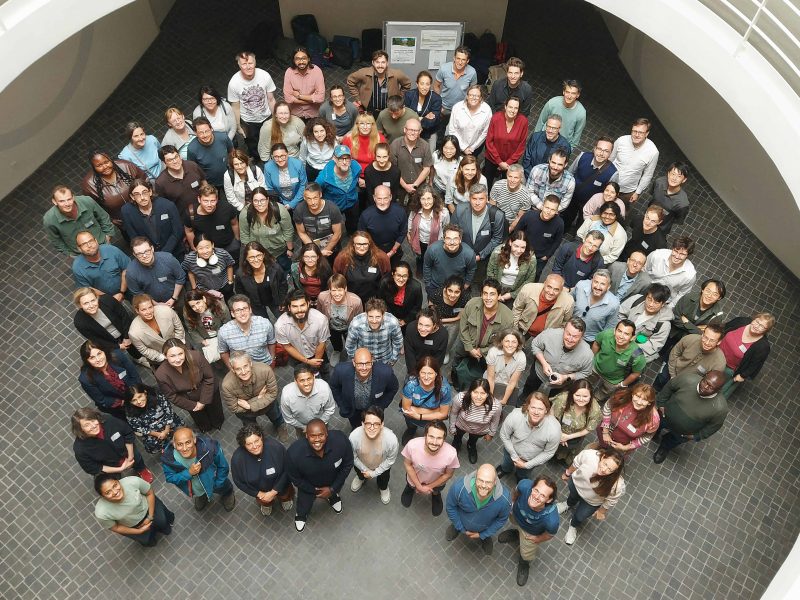
From 6—12 June 2026, the Potsdam Institute for Climate Impact Research (PIK) hosted a joint international workshop of the Inter-Sectoral Impact Model Intercomparison Project (ISIMIP) and the CROSS-CASCADE research network. ISIMIP is a community-driven climate impact modelling framework coordinated at PIK, and CROSS-CASCADE is a research networking project that investigates cross-sectoral cascading climate impacts across Europe and develops coherent policy responses to support effective climate adaptation.
The workshop reaffirmed ISIMIP’s foundational role: systematic, cross-sectoral climate impact model intercomparison is not merely an academic exercise but a critical process for building the robust, evidence-based understanding needed to support effective climate adaptation and mitigation. By systematically comparing multiple independent models, ISIMIP also produces scientific evidence whose robustness can be explicitly assessed and transparently communicated.
By systematically comparing results across independent impact models covering sectors including water, agriculture, health, energy, and many others, all driven by the same climate forcing data, ISIMIP produces findings whose robustness can be explicitly quantified. Where models agree, confidence is high; where they diverge, the reasons can be investigated and communicated transparently. This multi-model approach strengthens confidence in climate impact assessments by distinguishing robust findings from model-specific uncertainties.
A key discussion centred on ISIMIP’s strategic alignment with the next generation of climate projections. Participants discussed preparations for integrating CMIP7 (Coupled Model Intercomparison Project Phase 7) data as it becomes available. The goal is clear: to ensure that future climate impact studies—vital for informing national adaptation plans, infrastructure resilience, and the upcoming IPCC Seventh Assessment Report (AR7)—are grounded in the most current and comprehensive climate forcing data. Timely adoption of CMIP7 would allow ISIMIP to deliver impact projections based on state-of-the-art climate simulations, directly supporting AR7’s mandate to assess impacts, adaptation, and vulnerability with the best available scientific evidence.
In his opening keynote, PIK Co-director Johan Rockström emphasised the urgency and relevance of cross-sectoral climate-impact research for science, policy, and society and highlighted the importance of robust, process-based climate impact simulations for informing decision-making.
Keynote speaker Bart van den Hurk, Co-Chair of IPCC Working Group II, underlined that the IPCC’s ability to make robust statements on sectoral impacts depends critically on the kind of systematic, multi-model evidence ISIMIP provides and stressed that methodological transparency is one of the research community’s most important assets under political scrutiny.
Additionally, Marina Romanello, Executive Director of Lancet Countdown Europe, highlighted the growing demand for health impact attribution—quantifying how much of today’s observable health burden is caused by anthropogenic climate change. Her keynote set the stage for discussions on aligning ISIMIP with the Lancet Countdown.
As several ACCREU team members are actively involved in ISIMIP, including research on energy, land use, and extreme events, these developments will directly support work within ACCREU while also facilitating the broader uptake and dissemination of ACCREU methods and results beyond the project’s lifetime.